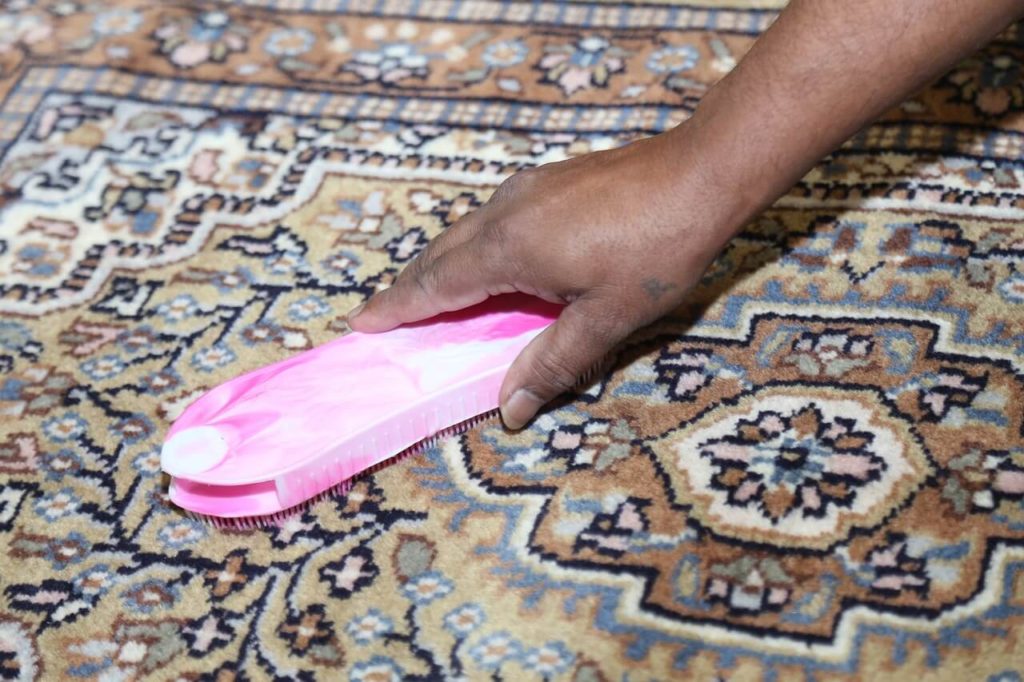
Precision Craftsmanship in Exquisite Floor Coverings
We all love beautiful hand made Persian rugs bursting with colour and soft cosiness. They are amazing pieces of art with the craft of making these rug masterpieces (easily crowned the kings of floor coverings) originating long before shops ever existed.
I am so excited to write about
Professional cleaning is of the utmost importance with dry rug cleaning (applying odourless mineral solvent) being the strongly recommended method. Living in London, UK people have a big advantage due to the high number of recommended reputable carpet and upholstery cleaning companies.
What Types of Persian Rugs Are There
I will go through the various types of Persian Rugs and then I will come back with more details about the cleaning methods suitable for each piece.
Nain Persian Carpets and Rugs
High reputation masters of
Tehran Rugs
Obviously names after Iran’s capital, Tehran rugs began being hand made in the late nineteen and the early twentieth century. Some of the Thran rugs are made specifically as prayer rugs. A famous
Hamedan Rugs
Also known as Hamadan named after the city of the same name, situated in West Iran, one of the oldest cities in the world. The city is in the centre of the rug trade and manufacture. There are many different small villages around Hamadan that create their
Tabriz Persian Carpets and Rugs
The handmade Tabriz rugs are very famous with their structure rich in silk threads. Very difficult to clean – only extremely experienced rug treatment specialist should clean the fibres.
Lorestan Handmade Rugs from Persia
Originating from the ancient times, the Lors (Lori nomads) tribes are the ones hand making these precious pieces. Brightly coloured, there rugs are beautiful, cosy and expensive. Strongly advise to hire a good reputable carpet cleaner when time for clean arrives.
Azerbaijani Rug
Carpet and rug weaving has its roots in Iranian Azerbaijan from the very old ancient times. These wonderful pieces of art are used to cover not only floors but decorate walls, beds, chairs, old-style TVs and others.
Do you need help with a list of questions in order to vet your chosen rug cleaning company before you commit to the booking?
Here it comes…very soon.